
Software
 Flatpak
Install desktop apps across different Linux distros.
What is Flatpak?
Flatpak apps are designed to work across many distributions. They are kept more separate from the core system and can often provide newer desktop apps.
- Good for desktop apps that need a newer version
- Works across different distributions
- Uses extra storage for shared runtimes
What is Flathub?
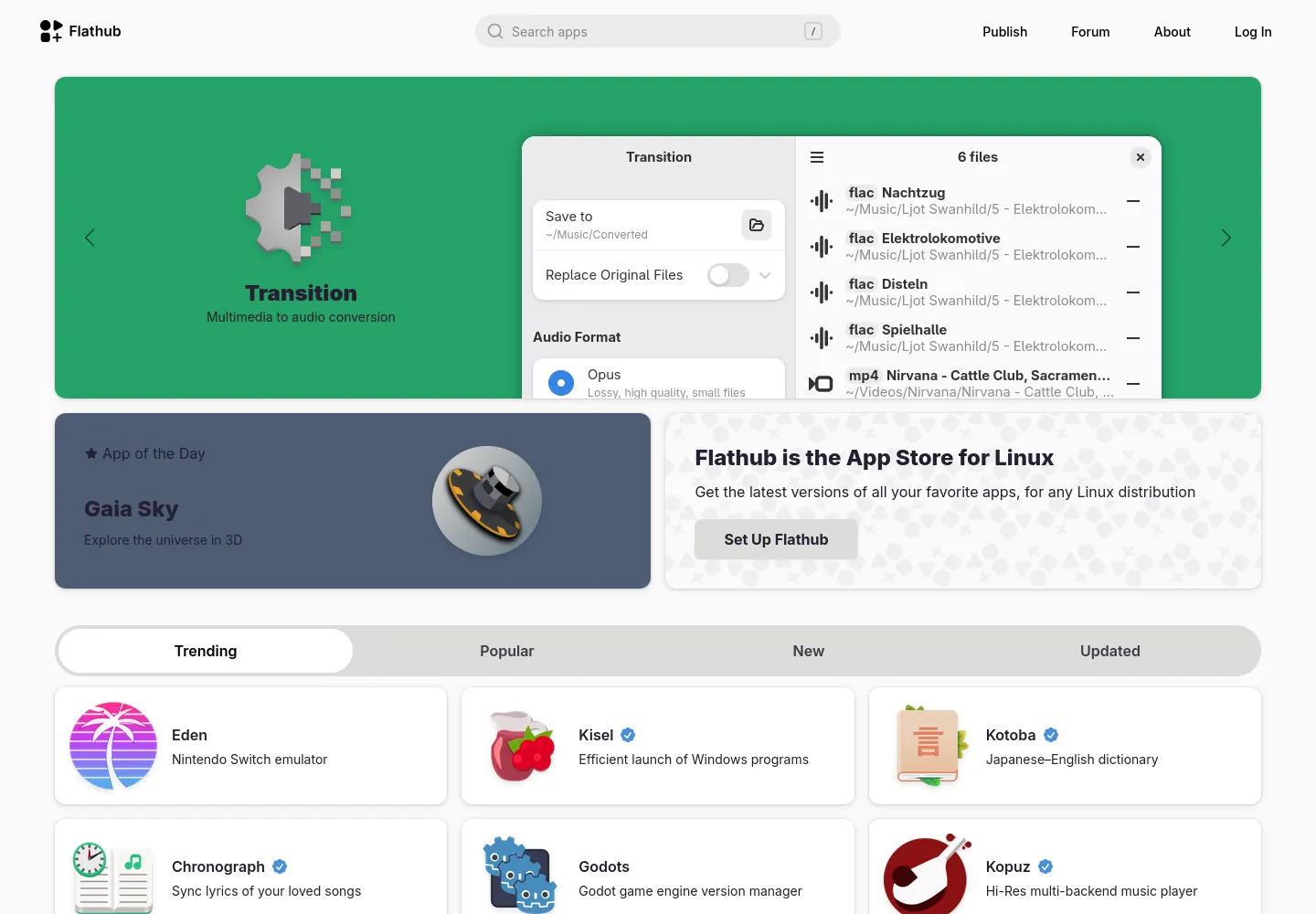
Flathub is the main place to find and install Flatpak apps, and the usual starting point for most users. Flatpak is the format; Flathub is the app store.
Find your distro’s install guide here (opens in a new tab)
Browse apps on Flathub (opens in a new tab)
Install an app
Once you’ve set up Flathub, you can install apps from it. Replace org.example.App with the app ID shown on its Flathub page.
flatpak install flathub org.example.AppUpdate your Flatpaks
Update your Flatpak apps and the shared files they need.
flatpak updateSee your installed apps
List the Flatpak apps on your system, including their IDs.
flatpak list --appRemove an app
Replace org.example.App with the ID of the app you want to remove.
Remove the app but keep its settings and saved data:
flatpak uninstall org.example.AppRemove the app and its local Flatpak data, including settings and saves stored there. Back up anything you want to keep first:
flatpak uninstall --delete-data org.example.AppFiles saved elsewhere or in the cloud may remain.
Clean up unused files
Remove shared files that your Flatpak apps no longer need. Check the list before confirming.
flatpak uninstall --unused